Dwelling in American Literature
A Certificate Program
A nine-credit, 3 course Certificate teaching American Literature to Architecture and Engineering students
Coming soon: A certificate program teaching American Literature to Architecture and Engineering students. It is pending Senate and UCORE approvals.
INTRODUCTION
Architects and engineers typically consider literature someone else’s business, as works of fiction removed from the material realities with which they have to deal. Few colleges have succeeded in overcoming this disciplinary bias. The following certificate seeks to change that, offering a three course opportunity to teach American Literature to Architects and Engineers. In it, students will learn, among other lessons, how to assess the human value behind the objects we build as a society, be it a machine or a building, a car or a bridge. We may be able to build amazing things but do we really know how they impact the quality of life, notions of equity and social justice. Conversely, the certificate will also be used as a way to open before students the ability to ask big questions and practice the art of visioning. It will be taught under the heading of “Dwelling in American Literature: an experiential program for Architects and Engineers.”
Of the many authors who define the pantheon of American Literature, those who have focused on works of engineering and the built environment will be given front seat. Among them will be Nathaniel Hawthorne, Harriet Beecher Stowe, Frederick Douglass, Ralph Waldo Emerson, and Henry David Thoreau-all in one way or another pried open a previously closed system and looked inside. But also Edith Wharton, Jack London, Theodore Dreiser, James Weldon Johnson, and Ann Petry whose visionary work explored the promise of a country that by the late nineteenth century and early twentieth had become culturally stagnant.
Course one will focus on reading and writing, separated by exercises whose purpose is the practice of interpretation and analysis. Here, students will learn, among other things, how to use rhetoric to achieve a certain critical end. Course two will look to the studio platform as an opportunity to advance the lessons of course one but through design. Students will be given a simple challenge and be asked to tackle it through established themes. Course three will look to consolidate course one and two through travel and other tools of creative expression.
COURSE ONE: ENGLISH 210 UCORE [HUM]

English 210, Dwelling in American Literature, is an introduction to short fiction, poetry, and nonfiction narratives from the nineteenth- through the twenty-first centuries from the perspective of our built environment. Through readings in American literature, this course will ask students to engage in the following:
- To compare the social attitudes of our own time with those in the past by analyzing how social perspectives were revealed in literature of earlier centuries.
- To recognize how systems governing housing and dwelling places shaped or resisted attitudes about culturally marginalized people.
- To review and implement techniques of good academic writing through writing workshops.
- To work with and learn to evaluate primary and secondary resources, including locating primary print sources and digitized versions online, learning to use the MLA Bibliography and other databases to find secondary sources, learning to assess web materials for reliability, and locating primary source materials.
- To synthesize the knowledge thus gained into papers and presentations in order to disseminate those insights to the class.
COURSE TWO: SDC 220 UCORE [ARTS]

In the first course of the certificate, we looked at several literary sources to unpack the humanity behind architecture and engineering. Who produces works of architecture and engineering and how. Both architecture and engineering concern themselves first and foremost with questions of safety and functionality. Those who come to rely on them must feel secure in doing so. But they are also more than that, namely an ecosystem of decisions and consequences that impact the way humans live and find meaning. In the second phase of the certificate we will build on the finding of the first, testing lessons learned through the lens of design. The setting will not be the classroom but the studio, where much of the learning will happen across drawings, sketches, study models and the like. How might knowledge, say, about domestic life generated through literature inform decisions about designing the 21st century living room. Or for that matter the office and the role that technology may have played in shaping employee relations.
COURSE THREE: SDC 230
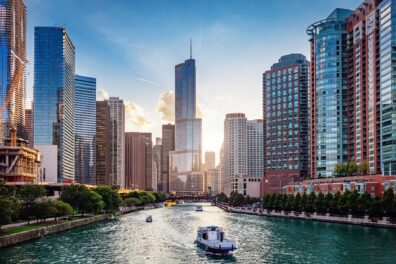
This course will be centered around a trip to Chicago about halfway through the semester. Chicago is important in more ways than one. Among all the interesting cities across the nation, it is known as The American city, largely because of the way it grew out of the countryside and served as the hub for movement in lumber, wheat, cattle and more. Among its many feet of engineering, two stand out, the tall building and the reversing of the river away from Lake Michigan and toward the Illinois river. The two happened almost at the exact same time, around the 1890s and just before the great World Columbian Exposition of 1893, a monument to planning and management all on its own. Indeed, the city by the late 19th century was the center of culture and innovation, attracting many creative people from the hinterland, including F.L.Wright and John Dewey, later Thorstein Veblen and more. It was not for nothing that the progressive movement was found there, finding traction through such figures as Jane
Addams, John Dewey, but also Dwight Perkins, Emma Goldman, Wright, Daniel Burnham and more. It inspired literary and art productions, new building types and more. We will use the city as an opportunity to revisit literary themes developed in the first course of the certificate but also involve new ones.
Registration opens on May, 15th, 2023 for Fall course ENG 210, [HUM] UCORE 2023
RSVP for Brown Bag Sessions.
CONTACT
Ayad Rahmani (Picture)
Professor
Architecture
Carpenter Hall 114
509-335-7393
arahmani@wsu.edu
About:
Ayad Rahmani is Professor of Architecture in the School of Design and Construction. His scholarship centers on the area of critical theory, typically examining modern themes in architecture through the lens literature. He is the author of three books, two published and one upcoming in 2023 through Louisiana State University Press on the role Ralph Waldo Emerson played in fueling Frank Lloyd Wright’s campaign to change the American mind. Rahmani sits on the board of the F.L.Wright Building Conservancy.

Donna Campbell
Professor
English
Avery Hall 357
509-335-4831
campbelld@wsu.edu
About:
Donna Campbell is Professor of English. Her research focuses on 19th- and early 20th-century American literature, including numerous peer reviewed articles and two monographs, the most recent of which is Bitter Tastes: Literary Naturalism and Early Cinema in American Women’s Writing (2016). She is currently editing The House of Mirth for Oxford University Press in The Complete Works of Edith Wharton, a 30-volume series for which she is the Associate Editor.
Bibliography
Related Interests